
How to Establish Brand Authority with Podcast Guesting

How to Establish Brand Authority with Podcast Guesting
The way businesses grow has changed. Being visible online isn't optional anymore—it's essential. If people can't find you, they'll forget you exist.
Technology keeps pushing that forward. AI tools, automation, new platforms, SEO—everything moves faster. Customers expect more. Better experiences. Quicker answers. Clear value from the start. Businesses that don't keep up feel it fast.
But there's something that matters even more than keeping pace with technology. Trust.
Businesses don't survive just because they use the newest tools. They survive because people trust them. Without trust, no amount of innovation will carry you forward.
Authority is a big part of that trust. It's what makes people listen when you speak. It's what makes them pick you over a competitor offering the same thing at the same price.
If your audience doesn't trust your business, they won't buy. They won't recommend you. And they won't come back. But building that kind of brand isn't about posting more or being louder. It's about being present in the right places where your audience is already paying attention.
And right now, one of those places is podcasts.
What Does Brand Authority Mean
Before we talk about building authority through podcasts guesting, we need to understand what brand authority actually is.
David Aaker is a widely recognized authority on branding and often called the father of modern branding, describes brand equity as the value a brand adds to a product or service. Part of that value comes from perceived quality and associations—what people think and feel when they encounter your brand. Authority sits right in the middle of that.
When Robert Cialdini wrote about the principle of authority in Influence: The Psychology of Persuasion, he showed that people naturally defer to experts. We listen to doctors about health. We trust mechanics about cars. We follow advice from people who've proven they know what they're talking about.
Brand authority works the same way. Your brand isn't just what you sell. It's the reputation you carry with you everywhere you go.
It's when people see you as someone who knows their stuff. Not just someone with an opinion, but someone with expertise worth paying attention to.
Seth Godin talks about this in terms of permission and trust. In Permission Marketing, he argues that the brands that win aren't the ones shouting the loudest—they're the ones people choose to listen to. Authority is what gets you that permission in the first place.
What Are Three Types of Authority
Sociologist Max Weber identified three fundamental types of authority that explain how power and influence work in society. Understanding these helps clarify what you're actually building when you develop brand authority:
- Traditional Authority - This comes from long-established customs and practices. Think of monarchies or family businesses passed down through generations. People follow because "that's how it's always been done." In business, traditional authority might show up as legacy brands that have been around for decades. People trust them partly because they've always been there.
- Charismatic Authority - This is built on personal qualities—magnetism, vision, the ability to inspire. Leaders with this type of authority attract followers through force of personality and the strength of their ideas. Steve Jobs had it. So did Richard Branson. In branding, charismatic authority comes from leaders who can communicate compelling ideas and inspire others to follow them.
- Rational-Legal Authority - This comes from established systems, rules, and formal positions. Your boss has authority because of their title and the organizational structure, not necessarily because of tradition or personal charisma. In business, rational-legal authority shows up as credentials, certifications, awards, and recognized expertise. It's the MBA on your wall, the case studies on your site, the verified results you can point to.
Podcasts Are Where Your Brand Gets Built
In branding, you're usually building some combination of charismatic and rational-legal authority. You need the expertise and credentials (rational-legal) but also the ability to connect with people and communicate your ideas in compelling ways (charismatic).
Traditional authority takes decades to build—you're either an established player or you're not.
But the other two? Those you can develop intentionally through the conversations you have and the platforms you choose. And podcasts help you develop both. There’s also a practical upside most people overlook: backlinks.
Many podcasts publish show notes with links to your website, offers, or content. Those links help with SEO, increase your visibility in search, and send steady referral traffic long after the episode airs.
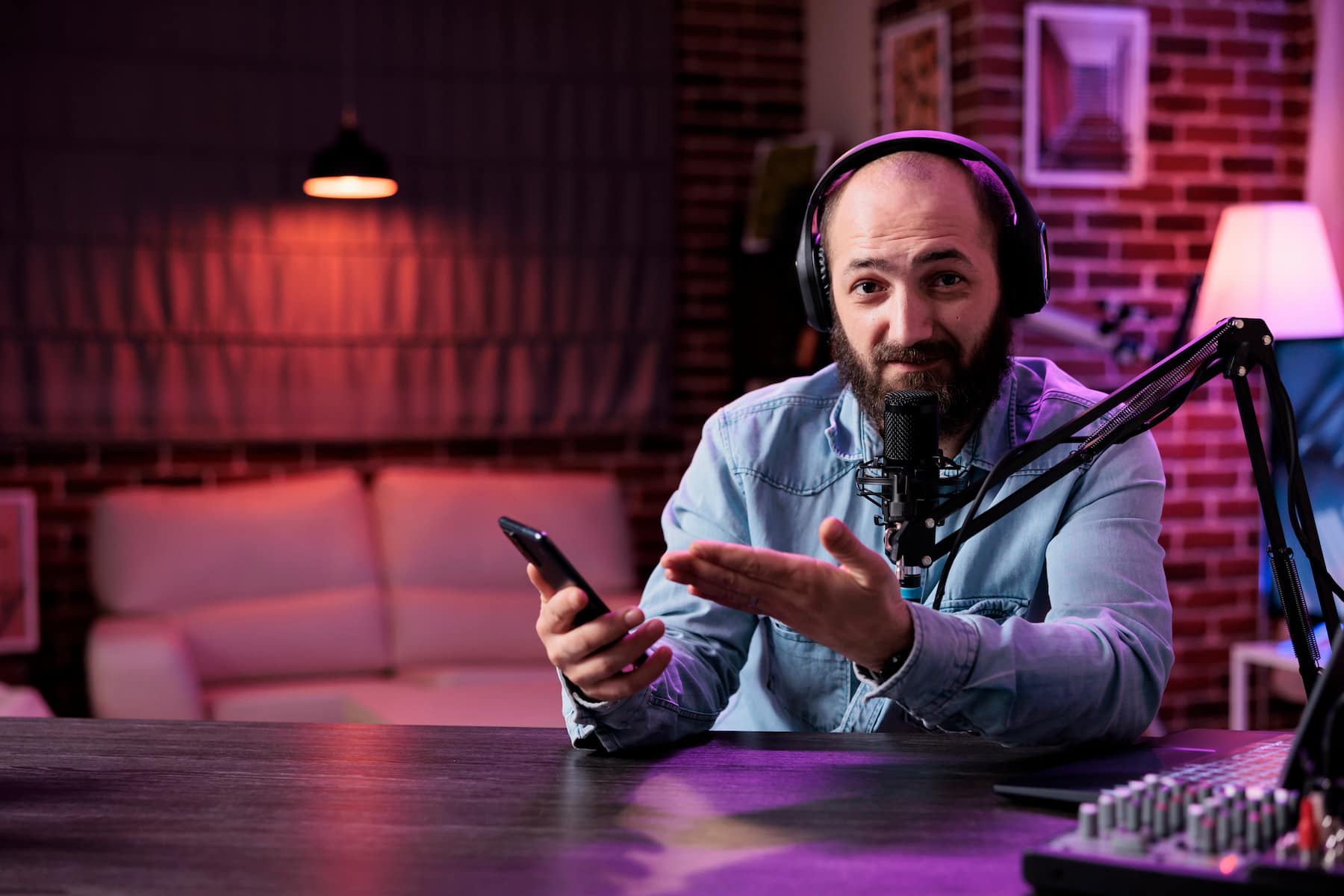
By bringing your knowledge to the microphone as a value-driven guest, podcasts give you an uncanny ability to establish authority in your niche, put yourself in front of a new audience with each interview you do, increase your overall reputation and visibility, accelerate your personal brand growth, and so much more.

Why Podcasts Work Differently Than Other Marketing
Most marketing interrupts people. Ads, emails, and posts fight for attention in crowded feeds. A lot of it feels like noise. Podcasts don’t work that way.
They’re built on long conversations. And that changes everything. Podcasts help you build two things simultaneously: credibility and connection.
Credibility alone makes you competent. Connection alone makes you likable. But together? They make you memorable and trustworthy.
That works because of borrowed trust. When that host introduces you as a guest worth listening to, some of that trust transfers to you immediately.
Here’s what actually makes podcasts different from other marketing channels:
- People choose to listen - They put in earbuds during their commute, at the gym, while they're working
- Engaged attention - They're not half-paying attention—they're focused in a way that's rare with almost any other content
- Extended focus time - You get their attention for longer than you'll get anywhere else
- Trust transfer - They're listening because they trust the podcast host, and when the host brings you on, some of that trust transfers to you before you even say a word
That’s what makes podcasts different. You’re not interrupting. You’re being invited in.
Building Both Types of Authority Through Podcasts
Remember Weber's framework? Podcasts help you build both charismatic and rational-legal authority at the same time.
Rational-Legal Authority:
- Share your expertise and methodologies
- Discuss your results and case studies
- Demonstrate your knowledge through specific examples
- Reference your credentials and experience
Charismatic Authority:
- Tell compelling stories that resonate
- Share your unique perspective
- Connect authentically with the host and audience
- Show vulnerability and real human experience
That combination is what turns a podcast appearance into actual authority.
Do that on five podcasts, then ten, then twenty, and something shifts. Your name starts circulating. People recognize you. Opportunities show up without you chasing them.
Your brand starts working for you. But it only happens if you're intentional about how you approach podcast guesting. Check more about How to Become the Best Podcast Guest.
Final Thoughts
Authority isn't something you buy with ads or claim in a bio. It's something other people grant you after you've proven yourself repeatedly.
It’s built when people hear you speak and think, this person knows what they’re talking about.
When they trust your perspective before they ever visit your website.
When your name comes up and it already carries weight.
Podcast guesting works because it puts you in real conversations, in front of audiences who are already paying attention. It lets you show expertise instead of claiming it. And it allows trust to build naturally, over time.
But results don’t come from one appearance. They come from consistency. From choosing the right shows. From showing up prepared. From focusing on value, not promotion.
Do that well, and podcasts stop being “marketing.”
They become part of how your brand earns trust, visibility, and long-term authority.
And in a crowded, fast-moving market, that’s what actually lasts.


